


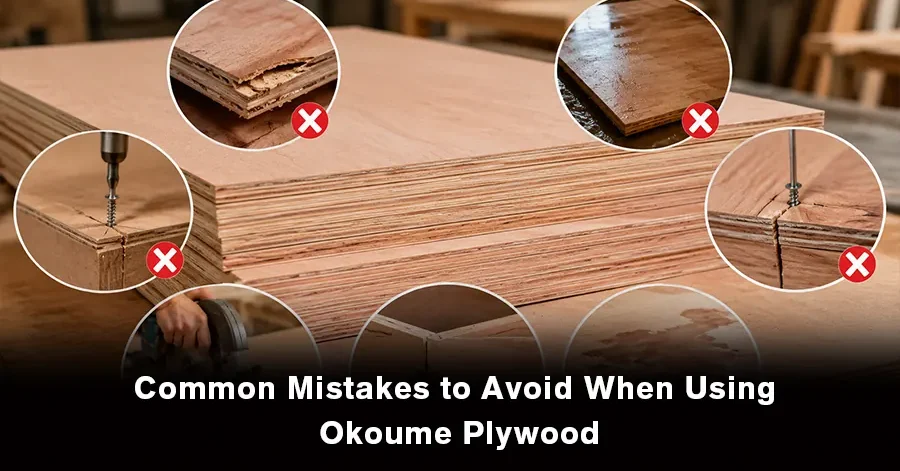
Why Proper Use of Okoume Plywood Is Essential
9 Common Okoume Plywood Usage Mistakes & Practical Solutions
Mistake 1: Choosing the Wrong Grade of Okoume Plywood
Not all Okoume plywood is designed for the same application.
Using interior-grade plywood for outdoor projects can significantly shorten its service life.
How to Avoid It
Select the correct grade according to your project.
| Application | Recommended Grade |
|---|---|
| Furniture | Interior Grade |
| Cabinets | Furniture Grade |
| Marine Projects | Marine Grade |
| Decorative Panels | AA or A Grade |
| Outdoor Structures | Waterproof Grade |
Using decorative-grade plywood in humid conditions may cause premature failure.
Mistake 2: Failing to Apply Moisture Protection to Okoume Plywood
- Edge swelling
- Delamination
- Mould growth
- Reduced structural strength
How to prevent these issues:
- Seal all cut edges thoroughly
- Apply waterproof coatings where required
- Store panels in a dry environment
- Prevent standing water on panel surfaces
Mistake 3: Incorrect Okoume Plywood Storage Prior to Installation
Poor storage is one of the primary causes of plywood warping.
- Long-term vertical storage of panels
- Outdoor storage
- Exposure to rain and direct sunlight
- Uneven support beneath stacked panels
Best storage practices:
- Store panels flat horizontally
- Keep them in a dry, well-ventilated warehouse
- Elevate stacked panels off the ground
- Cover with breathable protective sheeting
Mistake 4: Using Incorrect Fasteners for Okoume Plywood
- Surface splitting
- Cracking near panel edges
- Loose joints
- Reduced load-bearing capacity
Recommendations:
- Use high-quality wood screws
- Pre-drill holes near edges
- Maintain proper spacing from panel edges
- Avoid over-tightening fixings
Mistake 5: Painting or Veneering Without Proper Okoume Plywood Surface Preparation
Many users assume Okoume plywood requires no finishing because of its attractive appearance.
However, unfinished surfaces are more susceptible to:
- UV damage
- Moisture penetration
- Scratches
- Surface discoloration
Recommended Finishes
- Lightly sand the surface
- Remove all dust completely
- Apply a suitable primer
- Finish with premium paint or clear protective coating
Proper surface treatment improves durability and aesthetic quality.
Mistake 6: Overloading Okoume Plywood Panels
Lightweight does not mean unlimited strength.
Using thin plywood where thicker panels are required may lead to:
- Bending
- Sagging
- Cracking
- Structural failure
Okoume Plywood Thickness Guide
| Thickness | Typical Applications |
|---|---|
| 4–6 mm | Decorative panels, lightweight furniture |
| 9–12 mm | Cabinets, shelving, interior walls |
| 15–18 mm | Furniture frames, worktops |
| 18–25 mm | Marine structures, heavy-duty construction |
Selecting the correct thickness improves safety and durability.
Mistake 7: Cutting Okoume Plywood Without Proper Tools
Tips for clean cutting:
- Use sharp carbide-tipped blades
- Place the finished face down when cutting with a table saw
- Provide adequate panel support during cutting
- Apply masking tape along cut lines if needed
Mistake 8: Selecting the Wrong Okoume Plywood Supplier
- Core voids
- Poor bonding
- Inconsistent thickness
- Inferior veneers
- Low-grade adhesives
How to choose a reliable supplier:
- Manufacturing experience
- Formal quality certifications
- Stable raw material supply
- Consistent production standards
- Export experience
- Formal product inspection procedures
Mistake 9: Neglecting Regular Okoume Plywood Maintenance
Simple routine care can greatly extend its lifespan.
Maintenance tips:
- Clean surfaces regularly with a soft cloth
- Repair damaged surfaces promptly
- Reapply protective coatings as needed
- Inspect fasteners for corrosion
- Avoid prolonged exposure to excessive humidity