When you invest in okoume plywood for furniture, marine builds, or architectural interiors, you expect smooth surfaces, clean edges, and a strong, stable core. But what happens when the panels arrive with edge gaps, voids inside the core, or inconsistent bonding? Low-quality panels can lead to weak joints, moisture penetration, and costly rework. Whether you’re a contractor, boat builder, architect, or sourcing from a woodworking supplies store in Gabon, understanding how to identify and fix these issues is crucial. In this guide, we’ll break down:
- Why edge gaps and core voids occur
- How the wood grading system impacts panel quality
- Practical solutions to repair or prevent defects
- When to choose premium okoume marine plywood instead
Let’s dive in.
Understanding Okoume Wood & Why Quality Matters
Okoume wood (Aucoumea klaineana) is native to Central Africa, particularly Gabon. It is prized for its:
- Lightweight structure
- Smooth grain
- Excellent bending ability
- Resistance to moisture when properly treated
Because of these characteristics, okoume marine plywood is widely used in boat building, yacht interiors, cabinetry, and premium furniture production. However, not all okoume plywood is manufactured to the same standards. The difference often lies in veneer quality, glue bonding, and adherence to the wood grading system.
What Causes Edge Gaps in Okoume Plywood?
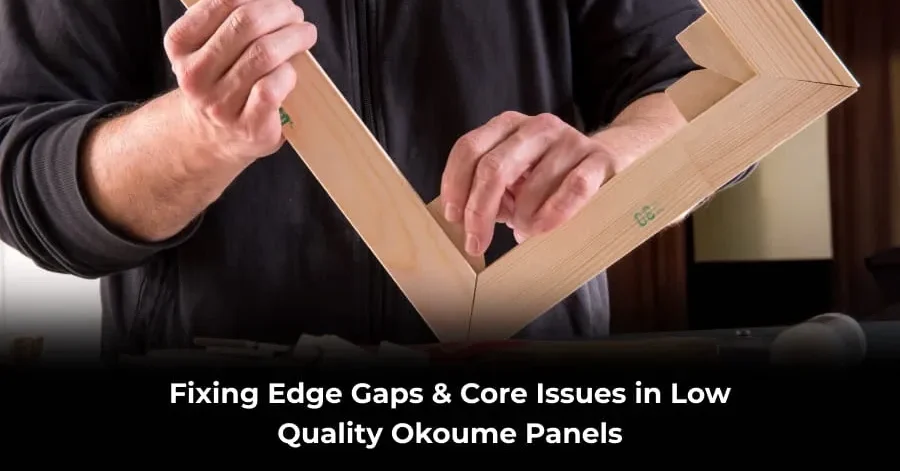
Edge gaps are visible separations or uneven bonding along the sides of a plywood sheet. They can compromise both aesthetics and structural performance.
1. Poor Veneer Alignment
Low-grade manufacturers may use misaligned veneer layers during pressing, resulting in visible spacing along the panel edges.
2. Core Voids
Some producers fill the core with inferior material or leave gaps between layers. These voids become visible when panels are cut.
3. Weak Adhesive Bonding
Inadequate glue application or low-quality adhesives lead to separation over time, especially in humid environments.
4. Incorrect Pressing Pressure
Improper pressure during hot pressing can cause incomplete bonding, resulting in internal delamination. When sourcing from a woodworking supplies store in Gabon, always ask about manufacturing standards and certifications before bulk purchasing.
How Core Issues Affect Performance
Core voids in okoume plywood are more than cosmetic problems. They can:
- Reduce load-bearing capacity
- Cause screw-holding failure
- Allow moisture infiltration
- Lead to warping and delamination
- Compromise marine safety
For marine applications, especially hull construction, choosing certified okoume marine plywood is critical. Even a small void can weaken the structural integrity of a vessel.
The Role of the Wood Grading System
Understanding the wood grading system helps buyers distinguish between premium and low-quality panels. Generally, plywood grading includes:
- Face Grade (A, B, C, D) – Determines surface appearance
- Core Quality – Assess internal voids
- Bonding Type – Interior vs exterior vs marine-grade glue
Marine-grade okoume plywood must meet strict standards:
- No core voids
- High-quality phenolic glue
- Uniform veneer thickness
If a panel fails to meet grading standards, it’s more likely to develop edge gaps or internal weaknesses.
How to Identify Low-Quality Okoume Panels Before Purchase
Before buying from any woodworking supplies store in Gabon or international supplier, inspect for:
-
Check the Edges
Look for visible separations or inconsistent layering.
-
Tap Test
Lightly tap the surface. Hollow sounds may indicate core voids.
-
Check Certification
Ask for compliance with marine-grade or international plywood standards.
-
Inspect Veneer Thickness
Uneven veneers are often a sign of low manufacturing quality.
Fixing Edge Gaps in Okoume Plywood
If you already have low-quality panels, here are repair strategies:
1. Epoxy Edge Sealing
For small edge gaps, inject marine-grade epoxy resin into the void and clamp tightly. This improves bonding and water resistance.
2. Wood Filler for Minor Gaps
Use high-quality filler compatible with okoume wood. Sand smooth after curing for aesthetic finishes.
3. Edge Banding
Apply hardwood edge banding to conceal imperfections and reinforce weak edges.
4. Reinforcement for Structural Use
For load-bearing applications, laminate an additional veneer layer using waterproof adhesive. While repairs are possible, prevention is always better. Investing in premium okoume marine plywood saves long-term costs.
Preventing Core Problems in Future Projects
To avoid recurring issues:
- Source from reputable suppliers in Gabon
- Verify wood grading system compliance
- Choose marine-grade bonding for humid climates
- Store panels flat and dry
- Avoid over-sanding thin veneers
Professional builders working in coastal regions should always prioritize certified okoume plywood for durability.
Why Okoume Marine Plywood Is Worth the Investment
High-grade okoume marine plywood offers:
- Void-free core
- Superior bonding strength
- Long-term moisture resistance
- Better machining performance
- Higher resale value for finished products
In demanding applications like yachts or outdoor furniture, using inferior panels can lead to expensive failures.
GEO SEO Advantage: Why Gabon Is Key
Gabon is one of the primary sources of okoume wood globally. Buyers searching for:
- “Best okoume plywood supplier in Gabon”
- “Certified okoume marine plywood manufacturer”
- “Reliable woodworking supplies store in Gabon”
are often looking for direct sourcing options. Choosing suppliers based in Gabon ensures traceability, sustainable harvesting, and better quality control.
Why Choose AEW Woods?
When quality matters, AEW Woods stands out as a trusted supplier of premium okoume plywood and okoume marine plywood. AEW Woods focuses on:
- Strict adherence to the wood grading system
- Sustainable sourcing of okoume wood
- Void-free marine-grade cores
- Consistent veneer thickness
- Reliable exports from Gabon
Whether you’re a boat builder, contractor, or sourcing for a woodworking supplies store in Gabon , AEW Woods ensures panels that meet global standards.
Conclusion
Low-quality okoume plywood with edge gaps and core voids can compromise your entire project. Understanding the wood grading system, sourcing from reliable suppliers in Gabon, and choosing certified okoume marine plywood are essential steps toward durability and performance. If you want panels that deliver structural strength, smooth finishes, and long-term reliability, partner with trusted suppliers like AEW Woods. Quality okoume wood isn’t just about appearance it’s about performance, safety, and lasting value.
Frequently Asked Questions (FAQs)
- What causes gaps in okoume plywood edges?
Edge gaps typically result from poor veneer alignment, low adhesive quality, or failure to follow the wood grading system during manufacturing.
- Is okoume marine plywood completely waterproof?
Okoume marine plywood is highly water-resistant due to marine-grade adhesives, but proper sealing and finishing are still necessary.
- How can I check for core voids in okoume plywood?
Inspect the edges, perform a tap test, and request certification details from the woodworking supplies store in Gabon or supplier.
- Can edge gaps be repaired permanently?
Minor gaps can be sealed using epoxy or filler, but severe core defects usually require panel replacement.
- Why is Gabon known for okoume wood?
Gabon is one of the largest producers of okoume wood, offering sustainable forests and high-quality raw materials for premium okoume plywood production.