
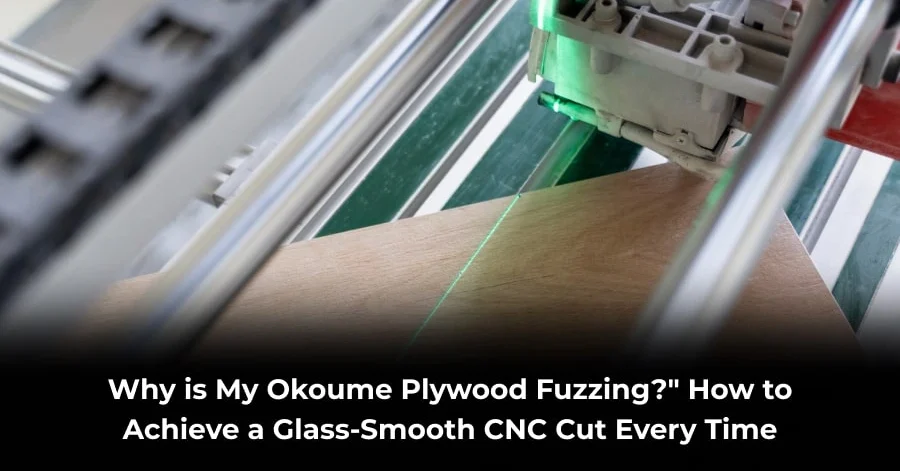
If you’ve ever worked with Okoume Plywood especially on a CNC router you already know why builders, boat makers, and furniture designers love it. Okoume wood is lightweight, beautifully uniform, and a staple in marine-grade fabrication. But even with all these advantages, many woodworkers run into a frustrating issue:
The fuzzing problem.
You finish a CNC pass, lift the sheet, and find small fibers or hairy surfaces instead of the silky-smooth cuts you’re expecting. For many creators sourcing high-quality sheets from Okoume Marine Plywood Suppliers, this can be confusing why does such a premium product produce fuzz?
Good news: fuzzing isn’t a defect. It’s a solvable cutting and preparation issue.
In this article, we’ll walk through why Okoume Plywood fuzzes, what you can do to stop it, and how to achieve glass-smooth CNC edges every single time. Whether you buy from a local woodworking supplies store or a global supplier, these insights will transform your workflow.
Why Does Okoume Plywood Fuzz? The Real Reasons Behind It
1. Okoume is a Soft Hardwood
Even though it’s used for marine applications, Okoume Marine Plywood is made from a softer hardwood species. This means its outer veneer fibers are fine, light, and more prone to lifting when exposed to high-speed tools.
2. Poor Tool Sharpness
Blunt CNC bits tear fibers instead of slicing cleanly.
That leads to:
- Stringy edges
- Hairy corners
- Rough engraving details
When working with Okoume wood, sharpness is everything.
3. Incorrect Feed and Speed Settings
If:
- Your feed rate is too slow
- Your spindle speed is too high
- Your chip load is too small
…you burnish fibers instead of cutting them. Fuzzing increases dramatically.
4. Veneer Grain Direction
The top veneer of Okoume Plywood can fuzz heavily when cut against the grain, especially on small interior pockets or detailed shapes.
5. Low-Quality or Improperly Stored Panels
Even the best Okoume Marine Plywood Suppliers sometimes see batches affected by humidity. Moisture-affected veneers become raised and tear more easily during CNC routing.
How to Achieve a Glass-Smooth CNC Cut in Okoume Every Time
Perfect finishes come down to tooling, machine settings, and prep workflows.
1. Use Premium Upcut/Downcut Compression Bits
A compression bit ensures fibers are pushed both upward and downward, creating a clean shear at the centerline. This prevents top and bottom veneer tear-out.
Best choices:
- 1/4-inch compression bit for general shapes
- 1/8-inch downcut bit for detailed pockets
A good woodworking supplies store will have these in stock.
2. Match Your Feed Rate + Spindle Speed
To cut Okoume without fuzzing, use this baseline formula:
Feed Rate: 2500–3500 mm/min
Spindle Speed: 14,000–16,000 RPM
Stepdown: 2–3 mm per pass
Chip Load: 0.003–0.006 in
This produces chips not dust which is essential for clean cuts.
3. Keep Bits Razor Sharp
Dull edges = torn fibers.
Rotate or replace bits after:
- 6–8 hours of continuous cutting
- Every large batch of Okoume panels
Sharpening also improves safety and reduces CNC motor strain.
4. Seal the Surface Before Cutting
Lightly roll a thin coat of:
- Sanding sealer
- Shellac
- Water-based polyurethane
Sealing locks veneer fibers together so the bit slices cleaner.
5. Use Proper Vacuum Hold-Down
Movement or vibration = chatter = fuzzing.
Ensure your vacuum table or clamps keep the Okoume Plywood sheet completely stable.
6. Add a Finishing Pass
A final 0.2–0.4 mm cleanup pass polishes the edges and removes micro-fuzz.
7. Sand with the Right Grit Sequence
After cutting, use:
- 180 grit to remove light fuzz
- 220 grit to smooth edges
- 320 grit for a silky finish
Sanding with the grain is crucial for Okoume Marine Plywood.
How Moisture Affects Fuzzing in Okoume Plywood
Moisture-content imbalance is one of the biggest hidden causes of fuzzing.
If the sheet has absorbed humidity, the veneer swells slightly. When the CNC bit hits swollen fibers, they shear poorly and fuzz appears.
What you can do:
- Store plywood indoors
- Keep it stacked flat
- Acclimate it for 24 hours before cutting
Top Okoume Marine Plywood Suppliers usually dry their sheets properly, but climate variations can still cause surprises.
Pro Tips for CNC Machining Okoume Like a Professional
✔ Use climb cutting for crisp edges
This reduces tear-out when cutting against the grain.
✔ Add onion-skin passes
Leave 0.3 mm at the bottom, then slice it clean on the final pass.
✔ Test cuts on scrap
Every sheet is slightly different, even from the same woodworking supplies store.
✔ Use dust extraction
Fine Okoume fibers in the air can resettle on the board and cause sanding issues.
Glass-Smooth Finish Recipe for Okoume CNC Projects
Follow this simple workflow:
- Prepare
- Acclimate plywood
- Seal surface
- Choose fresh compression bits
- Cut
- Use proper feed and speed
- Add a finishing pass
- Apply climb cutting where needed
- Finish
- Sand (180 → 220 → 320 grit)
- Apply sealer or marine coating
- Buff edges for a flawless feel
This process works for boatbuilding, décor panels, furniture parts, and any premium CNC project involving Okoume Marine Plywood.
Why Premium Okoume Panels Matter
Not all Okoume sheets are created equal.
Higher-grade plywood from trusted Okoume Marine Plywood Suppliers gives you:
- Uniform veneers
- Fewer voids
- Better bonding
- Reduced fuzzing
- Cleaner CNC routing
If you’re experiencing extreme fuzzing, it may be due to:
- Low-grade veneer
- Poor moisture control
- Inconsistent glue layers
Switching to higher-quality Okoume Plywood instantly improves results.
Conclusion
Okoume wood is one of the most rewarding materials to craft with lightweight, strong, and stunning in appearance. Fuzzing may be a common issue, but it is 100% fixable with the right tools, machining settings, and preparation techniques.
By using quality sheets, maintaining sharp tooling, optimizing your CNC settings, and finishing properly, anyone can achieve glass-smooth CNC cuts on Okoume Plywood every single time.
Whether you’re sourcing materials from an online supplier or your local woodworking supplies store, mastering these techniques will elevate every project you create.
And if you want reliable, premium-grade Okoume Marine Plywood, look no further than AEW Woods a trusted name known for consistent quality, excellent surface finish, and professional-grade sheets suitable for CNC machining, boatbuilding, and fine woodworking.
Frequently Asked Questions:
- Why does Okoume Plywood fuzz more than other plywood types?
Because Okoume wood is a soft hardwood with fine fibers that lift easily when cut with dull tools or incorrect CNC settings.
- How do I prevent fuzzing during CNC cutting?
Use compression bits, correct feed/spindle speed, seal the veneer surface, and always use a finishing pass.
- Does Okoume Marine Plywood require special sanding?
Yes use progressive grits (180 → 220 → 320) and always sand along the grain for best results.
- Can low-quality plywood cause excessive fuzzing?
Absolutely. Inconsistent veneers and moisture problems in low-grade sheets from non-reliable sources result in heavy fuzzing.
- Where can I buy high-grade Okoume Plywood for CNC projects?
You can find premium Okoume sheets at a good woodworking supplies store or trusted suppliers like AEW Woods, known for quality and durability.