

Introduction
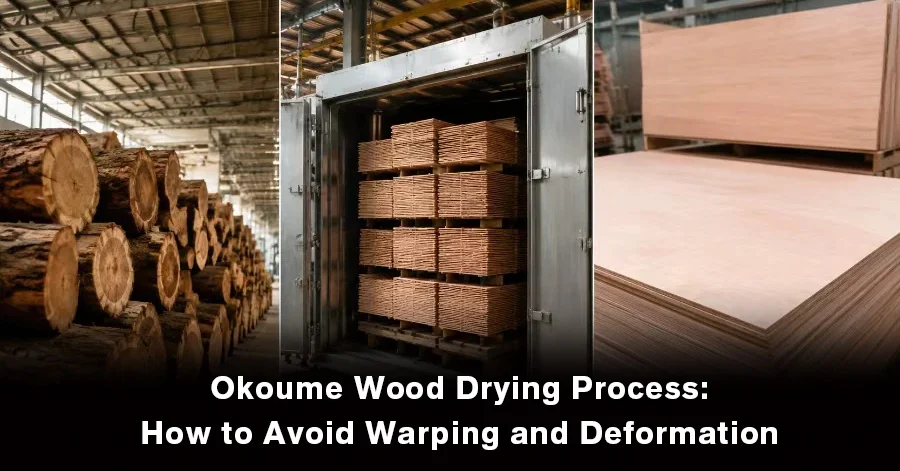
The Okoume wood drying process is a critical step in producing high-quality Okoume timber and plywood products. Proper drying helps control moisture content, improve dimensional stability, and prevent common problems such as warping, cracking, and deformation.
Okoume wood is a lightweight tropical hardwood widely used in plywood manufacturing, boat building, furniture production, and interior applications. Known for its smooth texture, light color, and excellent workability, African Okoume wood is widely used for producing high-quality veneers, marine plywood, furniture panels, and interior materials.
However, like many tropical hardwood species, Okoume wood contains natural moisture that must be carefully controlled before processing. An improper drying process can lead to wood defects, reduced durability, and poor product performance.
This guide explains the complete Okoume wood drying process, common drying problems, and effective methods to prevent warping and deformation.
Why Is Drying Important for Okoume Wood?
Freshly harvested Okoume wood contains a high level of moisture. If the wood is processed without proper drying, internal stress can develop as moisture evaporates unevenly.
The main purposes of drying Okoume timber include:
- Reducing moisture content to a stable level
- Improving dimensional stability
- Preventing cracks and deformation
- Enhancing bonding performance in plywood production
- Improving surface finishing quality
For Okoume plywood manufacturing, proper drying is especially important because unstable veneer layers can affect panel flatness and durability.
What Is the Ideal Moisture Content for Okoume Wood?
The recommended Okoume wood moisture content depends on the final application.
| Application | Recommended Moisture Content |
|---|---|
| Indoor furniture | 8%–12% |
| Interior decoration | 8%–12% |
| Plywood production | 8%–10% |
| Marine plywood | Around 8%–12% |
Maintaining the correct moisture level helps minimize wood movement after installation.
If the moisture content is too high:
- Wood may shrink after processing
- Glue bonding may become weaker
- Panels may warp
If the moisture content is too low:
- Surface cracking may occur
- Wood becomes more brittle
- Processing quality may decrease
How Is Okoume Wood Dried?
The Okoume wood drying process usually includes several important stages, from initial preparation to final moisture control.
1. Log Selection and Preparation
Before drying begins, high-quality Okoume logs are carefully selected.
Manufacturers check:
- Log quality
- Natural defects
- Grain structure
- Diameter and straightness
After cutting, the logs are processed into:
- Veneer sheets
- Timber boards
- Lumber sections
Proper preparation helps reduce future drying problems.
2. Natural Air Drying
Air drying is one of the traditional wood drying methods used before kiln drying.
During this stage:
- Fresh wood is stacked properly
- Air circulates between boards
- Moisture gradually escapes
Advantages of air drying:
- Lower energy consumption
- Reduced internal stress
- Natural moisture reduction
However, air drying requires more time and depends on:
- Climate conditions
- Wood thickness
- Air circulation
For commercial production, depending on production scale and climate conditions, some manufacturers may use air drying before kiln drying, while others directly use industrial veneer dryers after peeling.
3. Kiln Drying Process
Modern manufacturers mainly use kiln drying to achieve stable moisture levels.
During kiln drying:
- Wood is placed inside a controlled chamber
- Temperature and humidity are adjusted
- Moisture is removed gradually
- Final moisture content is tested
A proper kiln drying schedule controls:
- Temperature increase
- Drying speed
- Humidity balance
- Internal stress release
For Okoume wood drying, slow and controlled drying is important because rapid moisture loss can cause defects.
4. Moisture Testing and Quality Inspection
After drying, manufacturers test the wood to ensure it meets quality requirements.
Common inspection methods include:
Moisture Meter Testing
Used to check whether the wood reaches the required moisture content.
Visual Inspection
Workers check for:
- Cracks
- Warping
- Surface defects
- Color changes
Flatness Inspection
Especially important for Okoume veneer and plywood production.
Common Okoume Wood Drying Problems
Improper drying can cause several Okoume wood defects.
1. Warping
Warping occurs when different areas of the wood dry at different speeds.
Common types include:
- Bowing
- Cupping
- Twisting
Causes:
- Uneven moisture distribution
- Incorrect stacking
- Excessive drying speed
2. Cracking and Splitting
Cracks usually appear when moisture escapes too quickly from the wood surface.
Causes:
- High drying temperature
- Poor humidity control
- Excessive internal stress
3. Internal Stress
Even if the surface looks normal, poorly dried wood may contain hidden stress.
This can cause:
- Panel deformation
- Bonding problems
- Shape changes after installation
How to Prevent Okoume Wood Warping and Deformation?
Preventing deformation requires proper handling throughout the entire drying process.
1. Control Drying Speed
The most important factor is gradual moisture removal.
A controlled drying schedule helps maintain:
- Uniform moisture distribution
- Stable dimensions
- Better wood performance
2. Proper Wood Stacking
Correct stacking improves air circulation.
Recommended practices:
- Use equal thickness spacers
- Keep stacks level
- Avoid uneven pressure during stacking
- Protect wood from direct weather exposure
3. Maintain Proper Storage Conditions
After drying, Okoume wood should be stored in a stable environment.
Recommended storage:
- Dry warehouse
- Good ventilation
- Protected from rain and humidity
- Avoid direct sunlight
4. Use Quality Control During Production
Professional Okoume plywood manufacturers usually perform inspections at every stage:
- Veneer drying
- Moisture testing
- Hot pressing
- Panel inspection
This ensures consistent product quality.
Okoume Wood Drying Process for Plywood Manufacturing
In Okoume plywood manufacturing, drying plays an important role in final panel quality.
The typical production process includes:
- Log peeling
- Veneer cutting
- Veneer drying
- Glue application
- Layer assembly
- Hot pressing
- Sanding and finishing
Well-dried Okoume veneer provides:
- Better glue adhesion
- Smooth surface quality
- Improved panel stability
- Reduced deformation risks
Why Proper Drying Matters for Okoume Plywood Quality
High-quality Okoume plywood depends not only on veneer selection but also on precise moisture control.
Proper drying improves:
Strength
Stable moisture levels help maintain mechanical performance.
Durability
Reduced internal stress prevents long-term deformation.
Appearance
Better drying produces smoother surfaces with fewer defects.
Processing Performance
Dry and stable wood is easier to:
- Cut
- Sand
- Paint
- Laminate
Choosing a Reliable Okoume Wood Supplier
When purchasing Okoume wood or Okoume plywood, buyers should evaluate supplier capabilities.
Important factors include:
- Drying technology
- Moisture control system
- Production experience
- Quality inspection procedures
- Export experience
A reliable Okoume plywood supplier should provide consistent moisture content and stable product quality.
Conclusion
The Okoume wood drying process is a critical step in producing high-quality timber and plywood products. Proper drying reduces the risk of warping, cracking, and deformation while improving strength, stability, and processing performance.
By controlling moisture content, using suitable drying methods, and applying strict quality inspections, manufacturers can ensure that Okoume wood meets the requirements of furniture, marine, construction, and interior applications.
For buyers looking for durable and stable Okoume plywood, selecting a supplier with advanced drying technology and professional quality control is essential.