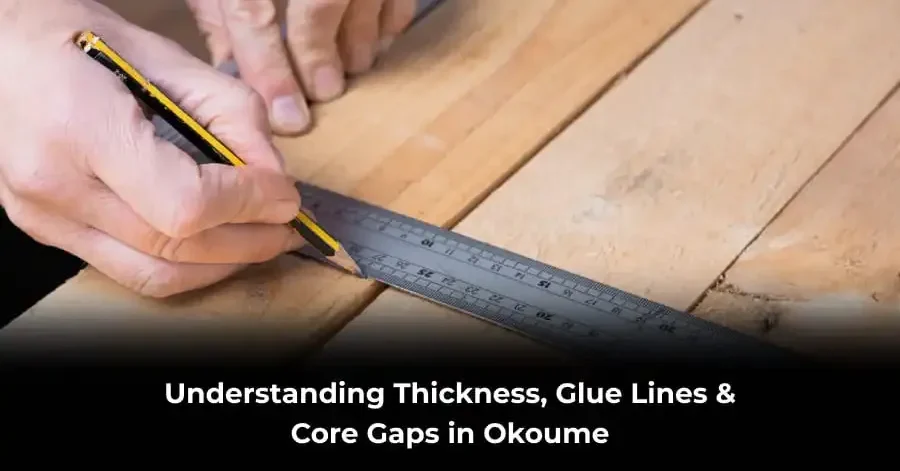
When choosing okoume plywood for your next woodworking or marine project, appearance alone is not enough. Many buyers focus only on surface finish or price, but experienced woodworkers know that thickness accuracy, glue lines, and core gaps determine the real quality of the board.
If you are working with okoume marine plywood, okoume veneer, or okoume wood, understanding these structural factors can save you from costly mistakes. Whether you’re a furniture maker, boat builder, or sourcing materials from a woodworking supplies store in Gabon, knowing what’s inside the plywood sheet is just as important as how it looks on the outside.
In this guide, we’ll break down how thickness, glue lines, and core gaps affect performance, durability, and value helping you choose high-quality okoume plywood for your project.
What Is Okoume Plywood?
Okoume plywood is manufactured using thin layers of okoume wood, a lightweight hardwood native to Central Africa, especially Gabon. The wood is known for its smooth texture, light pinkish-brown tone, and excellent workability.
Because of these characteristics, okoume veneer is widely used in decorative plywood panels, marine structures, furniture, cabinetry, and architectural designs.
Why Okoume Is Popular in Woodworking
- Lightweight but strong
- Smooth and attractive grain
- Easy to cut, sand, and finish
- Excellent for bending applications
- Widely used in okoume marine plywood
Many professionals sourcing materials from a woodworking supplies store in Gabon prefer okoume because it offers the perfect balance between strength and workability.
However, the real performance of the plywood depends on how the sheet is constructed internally.
Understanding Thickness in Okoume Plywood
Thickness is one of the first things buyers check when selecting okoume plywood, but not all sheets labeled with the same thickness are manufactured equally.
Nominal vs Actual Thickness
Manufacturers typically list plywood thickness as nominal size (for example, 12mm or 18mm). However, the actual thickness may vary slightly depending on the manufacturing process.
For example:
| Nominal Thickness | Actual Thickness Range |
| 6 mm | 5.5 – 6 mm |
| 12 mm | 11 – 12 mm |
| 18 mm | 17 – 18 mm |
This difference occurs because plywood sheets are pressed under high pressure during production.
Why Thickness Accuracy Matters
For projects involving okoume marine plywood, thickness precision becomes critical.
It affects:
- Structural strength
- Joint alignment
- Load-bearing capacity
- Surface finishing quality
Boat builders especially require consistent thickness because uneven panels can compromise structural integrity.
When buying from a woodworking supplies store in Gabon, always check whether the supplier provides calibrated plywood with uniform thickness.
What Are Glue Lines in Okoume Plywood?
Glue lines refer to the adhesive layers that bond individual veneers together inside the plywood sheet.
Each sheet of okoume plywood contains multiple layers of okoume veneer, glued together with strong adhesives under pressure.
Types of Glue Used in Okoume Plywood
Different applications require different glue formulations.
- Interior Glue (UF – Urea Formaldehyde)
Used for indoor furniture and cabinetry. - Exterior Glue (PF – Phenol Formaldehyde)
Water-resistant and suitable for humid environments. - Marine Glue (WBP – Weather and Boil Proof)
Used in okoume marine plywood to withstand water exposure and harsh marine conditions.
Why Glue Lines Are Important
The quality of glue lines determines:
- Water resistance
- Structural bonding
- Delamination resistance
- Long-term durability
Poor glue lines can cause layer separation, especially when exposed to moisture.
For marine applications, okoume marine plywood must use WBP glue to ensure long-term performance.
Suppliers sourcing from reliable mills or woodworking supplies stores in Gabon usually offer plywood manufactured with high-grade adhesives and strict quality control.
What Are Core Gaps in Okoume Plywood?
Core gaps are empty spaces or voids inside the plywood layers that occur when veneers are not perfectly aligned during manufacturing.
These gaps are usually hidden inside the sheet and may not be visible until the plywood is cut.
Why Core Gaps Are a Problem
Core gaps can lead to several issues:
- Reduced structural strength
- Weak screw holding capacity
- Increased risk of cracking
- Poor finishing results
- Water penetration in marine applications
For projects using okoume marine plywood, avoiding core gaps is extremely important.
Even small internal voids can allow water to seep into the layers, eventually damaging the plywood structure.
How to Identify Core Gaps
While buying okoume plywood, check for:
- Uneven edges when sheets are cut
- Hollow sounds when tapped
- Visible gaps on cross-sections
- Poor edge finishing
Reliable suppliers and woodworking supplies stores in Gabon typically offer void-free or low-void plywood grades suitable for demanding applications.
The Relationship Between Thickness, Glue Lines & Core Gaps
These three factors work together to determine the overall quality of okoume plywood.
| Factor | Impact on Quality |
| Thickness | Determines strength and load capacity |
| Glue Lines | Controls bonding and water resistance |
| Core Gaps | Affects durability and structural integrity |
A high-quality sheet of okoume marine plywood will have:
- Consistent thickness
- Strong waterproof glue lines
- Minimal or no core gaps
This combination ensures the plywood performs well in marine, furniture, and architectural applications.
Tips for Choosing High-Quality Okoume Plywood
If you’re purchasing from a woodworking supplies store in Gabon, keep these tips in mind.
1. Inspect the Edges
Check the cross-section for even veneer layers and minimal gaps.
2. Ask About Glue Type
For outdoor or marine projects, ensure the plywood uses WBP marine-grade adhesive.
3. Check Surface Veneer Quality
High-quality okoume veneer should be smooth, uniform, and free from patches.
4. Verify Thickness Calibration
Ensure the plywood is accurately sanded and calibrated.
5. Buy From Trusted Suppliers
Reliable suppliers ensure consistent manufacturing standards for okoume wood products.
Applications of Okoume Marine Plywood
Because of its lightweight and high workability, okoume marine plywood is used in many industries.
Boat Building
Okoume plywood is widely used for:
- Hull construction
- Interior boat panels
- Decking structures
Furniture & Cabinetry
The smooth finish of okoume veneer makes it ideal for:
- Cabinets
- Decorative panels
- Custom furniture
Interior Design
Designers use okoume wood for:
- Wall paneling
- Architectural features
- Lightweight partitions
Professionals sourcing from a woodworking supplies store in Gabon often prefer okoume because of its versatility and premium finish.
Why AEW Woods Is a Trusted Supplier of Okoume Products
When sourcing high-quality okoume plywood, okoume marine plywood, and okoume veneer, choosing the right supplier matters.
AEW Woods is a reliable provider of premium okoume wood products sourced from Gabon.
They focus on:
- High-grade veneer selection
- Strict quality checks
- Consistent thickness standards
- Minimal core gaps
- Marine-grade glue bonding
As a trusted woodworking supplies store in Gabon, AEW Woods ensures that every sheet of okoume plywood meets international quality standards for furniture, marine, and construction applications.
Whether you’re a professional woodworker, boat builder, or furniture manufacturer, AEW Woods offers dependable materials for long-lasting results.
Conclusion
Understanding the internal structure of okoume plywood is essential before making a purchase. Factors such as thickness accuracy, glue line quality, and core gaps directly affect the performance, durability, and safety of the material.
High-quality okoume marine plywood should have consistent thickness, strong waterproof glue lines, and minimal core gaps to ensure reliability in demanding environments.
Whether you’re designing furniture, building boats, or sourcing materials from a woodworking supplies store in Gabon, choosing well-manufactured okoume wood and okoume veneer products will significantly improve the success of your project.
By partnering with trusted suppliers like AEW Woods, you can ensure you receive premium-grade okoume plywood that delivers both performance and aesthetic appeal.
Frequently Asked Questions:
- What makes okoume plywood different from regular plywood?
Okoume plywood is made from okoume wood, which is lightweight, smooth, and easy to work with. It is commonly used in marine applications, furniture, and decorative panels because of its excellent finish and flexibility.
- Why is glue quality important in okoume marine plywood?
Glue lines determine the bonding strength between veneer layers. Okoume marine plywood uses waterproof WBP glue, which prevents delamination and improves resistance to moisture and harsh environments.
- How can I check for core gaps in okoume plywood?
You can inspect the edges of the plywood sheet for visible voids or uneven layers. Reliable suppliers and woodworking supplies stores in Gabon typically provide plywood with minimal or no core gaps.
- Is okoume veneer suitable for furniture making?
Yes, okoume veneer is widely used in furniture and cabinetry due to its smooth grain pattern and attractive appearance.
- Where can I buy high-quality okoume plywood?
You can purchase premium-grade okoume plywood and okoume marine plywood from trusted suppliers like AEW Woods, a reliable woodworking supplies store in Gabon offering high-quality okoume wood products.