

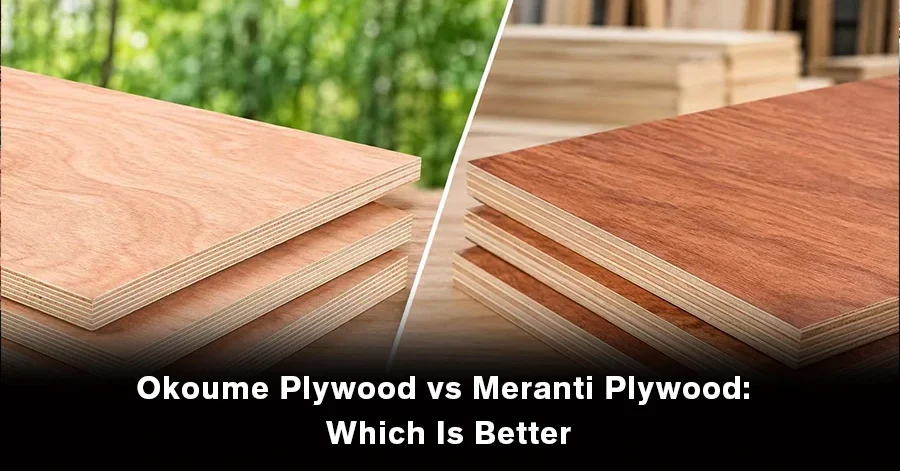
Okoume plywood and Meranti plywood are both popular tropical hardwood plywood options. Buyers often use them for construction, furniture making, and interior projects. However, the two materials differ in wood properties, applications, and price.
There is no clear winner between them. The better choice depends on what you need the plywood for.
In this guide, we’ll compare Okoume plywood and Meranti plywood in detail. This will help manufacturers, wholesalers, and plywood importers choose the right material for their projects.
What Is Okoume Plywood?
Okoume plywood is made from veneers of Okoume wood, scientifically known as Aucoumea klaineana. This tropical hardwood mainly grows in Central and West Africa, particularly Gabon.
Okoume wood has a relatively low density, a fine texture, and a naturally attractive pinkish to reddish-brown color. These characteristics make it a popular material for plywood manufacturing.
One of the biggest advantages of Okoume plywood is its lightweight structure. It is easier to transport, cut, handle, and install than many heavier hardwood plywood products.
Okoume plywood is particularly suitable for projects where low weight and surface appearance are important.
Learn More About Okoume Plywood: → Okoume Plywood Sizes
What Is Meranti plywood ?
Meranti plywood is made from Meranti wood veneers. Meranti is a commercial name for several tropical hardwood species in the Shorea genus.
Meranti trees grow mainly in Southeast Asia, especially Malaysia and Indonesia. Buyers often classify Meranti wood into Red Meranti and White Meranti based on its color.
Meranti plywood is commonly used for furniture, joinery, cabinets, doors, and general construction.
Key Features of Meranti Plywood
- Hardwood Construction: Meranti is generally harder and more wear-resistant than Okoume. It also offers better load-bearing capacity and impact resistance.
- Good Stability: Its dense structure helps reduce movement and warping. This makes it a good choice for furniture frames and other load-bearing applications.
- Natural Appearance: Meranti features attractive reddish-brown wood tones and natural grain patterns.
- Versatile Applications: Manufacturers use it for furniture, doors, cabinets, and interior finishing.
- Different Grades Available: Buyers can choose from various face grades and core constructions to meet different project requirements.
Disadvantages of Meranti Plywood
- Heavier Weight: Meranti has a higher density than Okoume, so its plywood is heavier and can be more difficult to handle and install.
- Coarser Surface: Its grain is generally less fine than Okoume. If you plan to paint the surface, you may need extra sanding and primer to achieve a smooth finish.
- Slightly Higher Cost: Meranti plywood generally costs a little more than Okoume plywood.
For buyers, it’s important to check the exact Meranti species, plywood construction, and technical specifications. Not all Meranti plywood offers the same performance.
Okoume Plywood vs Meranti Plywood: Key Differences
Although both products are tropical hardwood plywood, they have several important differences.
| Comparison | Okoume Plywood | Meranti Plywood |
|---|---|---|
| Wood species | Aucoumea klaineana | Several Shorea species |
| Main origin | Central and West Africa | Southeast Asia |
| Density | Generally 0.48–0.53 g/cm³ | Varies by species, often around 0.40–0.80 g/cm³ |
| Weight | Relatively lightweight | Varies from lightweight to relatively heavy |
| Color | Pinkish to reddish-brown | Pale to dark reddish-brown |
| Grain | Generally fine and uniform | Varies by species |
| Workability | Easy to cut and sand | Generally good |
| Surface finishing | Good for painting and staining | Suitable for various finishes |
| Common uses | Furniture, marine plywood, decorative panels | Furniture, doors, joinery, construction |
| Main advantage | Lightweight and smooth appearance | Wide range of hardwood properties |
Important: These figures are general wood-density references, not guaranteed finished-plywood densities. Actual plywood performance depends on veneer species, core composition, adhesive, thickness, moisture content, and manufacturing quality.
Water Resistance: Is Okoume or Meranti Better for Marine Use?
Water resistance is particularly important for boats, bathrooms, exterior furniture, and other moisture-exposed applications.
Neither Okoume nor Meranti plywood is automatically waterproof. The actual water resistance of plywood mainly depends on its adhesive system, veneer quality, edge protection, surface coating, and manufacturing standards.
Okoume is widely used in marine plywood because of its relatively low weight and good workability. It is a popular option for boat interiors, lightweight marine structures, and other weight-sensitive applications.
Meranti plywood can also be used in moisture-exposed environments when manufacturers produce it with suitable waterproof bonding and construction.
Which is better for marine plywood?
Okoume is often preferred for lightweight marine applications. However, the better choice depends on the required marine standard, construction quality, and intended use. A properly manufactured Meranti marine plywood panel may also be suitable for specific boatbuilding projects.
Key Differences and Buying Guide
| Comparison | Okoume Plywood | Meranti Plywood |
|---|---|---|
| Hardness and Wear Resistance | Softer and more prone to scratches | Harder and more wear-resistant |
| Weight | Lightweight and easy to handle and install | Heavier due to its higher density |
| Surface Finish | Smooth surface with a fine, even grain | Coarser grain that may require more sanding |
| Workability | Excellent. Easy to cut, shape, and bend | Good. Better suited to stronger, load-bearing structures |
| Price | Generally more affordable | Usually slightly more expensive |
- Choose Okoume Plywood: Okoume is a great choice for indoor wardrobes, kitchen cabinets, decorative furniture, and boat interiors. It’s lightweight, has a smooth surface, and takes paint well. It also works well in boatbuilding, especially for projects where low weight and easy machining matter.
- Choose Meranti Plywood: Meranti is a better option for load-bearing furniture, such as bookshelves and dining tables, as well as door and window frames. It’s a good fit for projects that need greater strength and durability. Some Meranti species also offer good hardness and strength. With proper moisture protection and suitable plywood construction, Meranti plywood can also work in humid areas such as bathrooms.
How to Choose a Reliable Okoume or Meranti Plywood Supplier
Product quality depends not only on the wood species but also on the manufacturer’s production process and quality control.
Before choosing a plywood supplier, consider the following factors:
1. Raw Material Quality
Ask about the origin of the wood and the quality of the face and core veneers. Consistent raw materials help manufacturers maintain stable product quality.
2. Production Standards
Check the manufacturer’s hot-pressing process, adhesive selection, sanding quality, and thickness control.
3. Product Specifications
Confirm available thicknesses, dimensions, face grades, core materials, and adhesive options.
4. Quality Inspection
A reliable supplier should be able to provide relevant inspection reports, bonding test results, and product documentation.
5. Customization Capabilities
For large-scale projects, customized dimensions, thicknesses, face grades, and adhesive systems can help meet specific market requirements.
At AEWWood, we focus on Okoume wood products and plywood solutions for international buyers. If you are sourcing Okoume plywood for furniture, marine applications, or decorative projects, contact our team to discuss product specifications, available sizes, and customized requirements.
Conclusion
When comparing Okoume plywood vs Meranti plywood, both materials offer useful advantages for furniture manufacturing, interior decoration, and other woodworking applications.
Okoume plywood stands out for its lightweight structure, attractive appearance, and suitability for weight-sensitive projects. Meranti plywood offers a wider range of hardwood properties, making it a versatile option for furniture, doors, and joinery.
The best plywood is not simply the one with the highest density or lowest price. It is the one that meets your project’s requirements for weight, strength, appearance, bonding quality, and durability.