

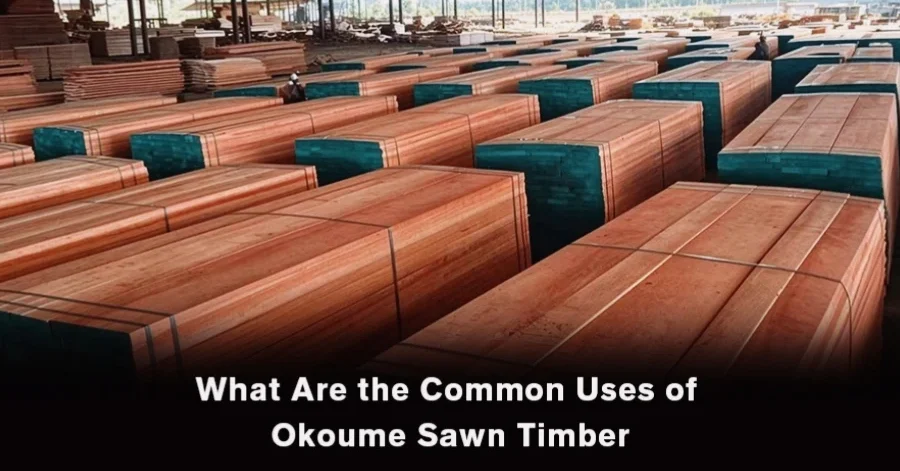
Okoume sawn timber is a popular choice for furniture, interior joinery, doors, windows and many other woodworking projects. It is lightweight, easy to work with and has an attractive pinkish-red color. Woodworkers can cut, shape and finish it without much trouble, making it a practical option for a wide range of applications.
But what can you actually make with Okoumé sawn timber? Does it work well for furniture, doors and windows? And is it suitable for outdoor projects?
In this guide, we’ll look at the most common uses of Okoumé sawn timber, what makes it a good choice and what buyers should check before placing an order.
What Is Okoume Sawn Timber?
The term “Okoumé sawn timber” has two parts: Okoumé and sawn timber.
Okoumé is a hardwood species native to West Africa. Its botanical name is Aucoumea klaineana. It is also known as Gaboon wood or African mahogany in some markets.
Sawn timber refers to wood that manufacturers cut from logs into boards, planks or squared pieces. Unlike round logs, sawn timber has already gone through the initial cutting process. It is also different from engineered wood products such as plywood and MDF.
So, Okoumé sawn timber simply means boards or squared timber cut from Okoumé logs. It is a common semi-finished wood product used in the timber trade, furniture manufacturing and other woodworking applications.
In simple terms, the process is straightforward: Okoumé logs are harvested, cut into boards or squared sections, and then sold as Okoumé sawn timber.
7 Common Uses of Okoume Sawn Timber
Okoumé sawn timber is lightweight, easy to work with and attractive in appearance. These qualities make it suitable for a wide range of woodworking projects.
However, it’s important to understand the difference between Okoumé logs, Okoumé rotary-cut veneer, Okoumé plywood and Okoumé sawn timber. They all come from the same tree species, but manufacturers process them differently, and each has its own uses.
This article focuses on solid wood cut from Okoumé logs. It does not treat plywood applications as uses of sawn timber.
Based on information from the Plant Resources of Tropical Africa (PROTA), CIRAD wood databases and international tropical timber references, Okoumé sawn timber is commonly used in the following areas.
1. Solid Wood Furniture Manufacturing
Furniture making is one of the most direct uses of Okoumé sawn timber. Manufacturers can turn it into different furniture parts, depending on the wood’s grade, size and thickness.
Common applications include:
- Five-layer solid wood panels: Manufacturers can saw Okoumé timber into thinner boards, dry them again in a kiln, and combine them with a core material to make five-layer solid wood panels. They then sand the panels to achieve an even thickness. Furniture manufacturers use these panels to make solid wood cabinet doors, especially for custom-made furniture.
- Cabinet parts and non-load-bearing components: Okoumé works well for drawer sides, cabinet interior panels, back panels and lightweight frames. It can also serve as a secondary material in black walnut furniture.
- Visible furniture components: Selected Okoumé timber with straight grain, few knots and a warm color ranging from orange-pink to light reddish brown can work well for furniture in natural, minimalist and contemporary styles.
One thing to keep in mind: Okoumé is generally better suited to furniture parts that do not carry heavy loads. Cabinet frames, decorative components and drawer parts are common examples.
For table legs, chair legs and other load-bearing parts, manufacturers should check the timber’s thickness, structural design, joint strength and expected load before using it.
2. Interior Doors, Windows and Wood Mouldings
Okoumé sawn timber is also suitable for interior doors, window frames and decorative woodwork. Its relatively good dimensional stability and workability make it easier to cut, shape and fit during installation.
Common uses include:
- Interior door and window frames
- Wood mouldings and trim
- Door casing and architraves
- Decorative wall panels
- Interior finishing components
These applications also benefit from Okoumé’s attractive natural color and smooth finish.
3. Stair Treads
Okoumé timber can be used for stair treads in suitable interior projects. Its relatively low weight and good workability make it convenient for woodworking and installation.
However, stair treads need to withstand repeated foot traffic and concentrated loads. Before choosing Okoumé, manufacturers should check its thickness, strength, support structure and finish requirements.
4. Musical Instrument Manufacturing
Selected Okoumé timber can also find its way into musical instrument manufacturing, particularly in guitar construction.
Its lightweight structure, workable grain and warm appearance make it a useful option for certain instrument components, including guitar bodies and soundboard-related parts. Manufacturers need to select suitable timber and control its moisture content to meet the requirements of instrument making.
5. Packaging and Wooden Crafts
Okoumé sawn timber is useful for lightweight packaging and smaller woodworking products.
Its relatively low weight makes it easier to handle and transport. Depending on the timber grade and dimensions, manufacturers can use it for wooden crates, packaging frames and protective components.
Its clean grain and easy-to-finish surface also make it suitable for wooden crafts, decorative items and woodworking patterns.
6. Boatbuilding and Marine Interior Fittings
Okoumé is a well-known timber in the boatbuilding industry, particularly for marine plywood and interior applications. Solid Okoumé sawn timber can also be used for selected boatbuilding components and interior fittings.
Typical applications include:
- Boat interior panels: Decorative wood components used in cabin interiors.
- Yacht interior furniture: Lightweight furniture parts for yacht cabins and living areas.
- Cabin cabinets: Cabinet frames, drawer components and storage fittings.
- Interior partitions: Selected wooden components used in non-structural cabin partitions.
- Marine interior joinery: Door frames, trim, mouldings and other interior woodwork.
For marine applications, buyers should consider moisture exposure, timber durability, protective treatments and the specific requirements of the vessel. Not every grade of Okoumé sawn timber is suitable for structural or continuously wet conditions.
Okoume Sawn Timber vs. Okoume Veneer: What’s the Difference?
Although both materials come from the same tree species, Okoume sawn timber and Okoume veneer have different manufacturing processes and applications.
| Comparison | Okoume Sawn Timber | Okoume Veneer |
|---|---|---|
| Production | Sawing logs into solid wood pieces | Peeling or slicing logs into thin sheets |
| Thickness | Available in various solid wood dimensions | Commonly around 0.3–2.0 mm |
| Structure | Solid wood | Thin wood sheets |
| Main applications | Furniture parts, frames, joinery | Plywood, decorative surfaces, panels |
| Processing | Sawing, planing, shaping | Drying, grading, gluing, pressing |
Okoume sawn timber is suitable when a project requires solid wood components.
Okoume veneer is more suitable for plywood production and surface applications where manufacturers need thin, consistent wood sheets.
If you want to learn more about veneer production and applications, explore our guide to Okoume Wood Veneer.
What Should Buyers Check When Purchasing Okoume Sawn Timber?
Choosing the right Okoume timber is important for product quality and manufacturing efficiency.
Before placing an order, consider these factors:
1. Moisture Content
Check the moisture content according to the intended application. Properly dried timber helps reduce the risk of excessive shrinkage, warping, and cracking after installation.
2. Dimensions and Tolerances
2. Dimensions and Tolerances
Confirm the required thickness, width, and length before production. Consistent dimensions can reduce processing waste and improve manufacturing efficiency.
3. Wood Grade and Appearance
Discuss acceptable knots, cracks, color variations, and other natural characteristics with your supplier. Different applications may require different appearance standards.
4. Surface Quality
Check whether the timber is rough-sawn, planed, or further processed. The required surface condition depends on your manufacturing process.
5. Packaging and Shipping
For international buyers, proper packaging helps protect timber during transportation and storage. Also confirm export documentation and any applicable timber import requirements.
Conclusion
Okoume sawn timber is a versatile material for furniture manufacturing, interior doors, cabinetry, decorative woodworking, and selected lightweight applications.
Its relatively low density, attractive natural color, and easy workability make it a useful option for manufacturers looking for lightweight tropical hardwood.
However, buyers should consider its moisture resistance, durability, grade, and intended application before purchasing.
At AEWWood, we understand that different woodworking projects require different timber specifications. Contact our team to discuss Okoume wood products, available dimensions, and customized supply options.