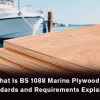


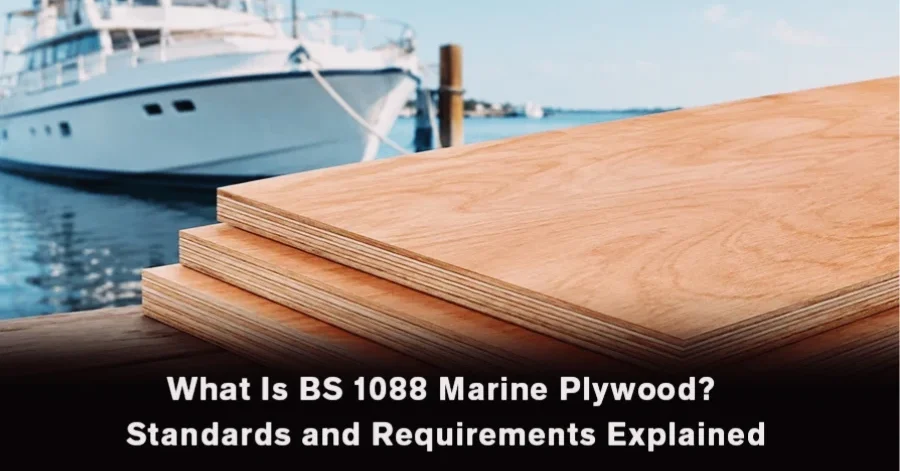
BS 1088 marine plywood is widely used in boat building, marine interiors, and other applications where moisture resistance and long-term durability matter. The standard sets clear requirements for plywood construction, veneer quality, bonding performance, and durability. It gives manufacturers and buyers a useful way to check whether a plywood product meets the needs of marine applications.
However, many buyers are still unfamiliar with the BS 1088 marine plywood standard and what it actually requires. In this guide, we’ll break down the key points of BS 1088, explain its main technical requirements, and highlight what to look for when buying marine plywood. This will help you understand the quality standards and make a more informed purchasing decision.
What Is BS 1088 Marine Plywood?
BS 1088 marine plywood is plywood manufactured to meet the requirements of the British Standard BS 1088:2018, titled Marine Plywood – Requirements.
The main purpose of BS 1088 is to ensure that marine plywood delivers reliable durability, resistance to biological deterioration, and long-lasting bonding performance in demanding marine environments. It is designed for applications such as boat building, shipbuilding, and marine engineering, where high humidity and salt exposure can affect material performance.
Unlike ordinary plywood, marine plywood manufactured to this standard must meet strict bonding and construction requirements. Manufacturers must use suitable durable adhesives and ensure that the panels meet the specified bonding performance tests. The standard also sets requirements for core veneer quality, moisture content, thickness accuracy, and overall panel construction.
These requirements go beyond short-term water resistance. They help marine plywood maintain its structural integrity and bonding performance over time under demanding service conditions.
BS 1088:2018 divides marine plywood into two classes:
- Standard Marine Plywood: Designed for demanding marine applications where durability and reliable bonding performance are essential.
- Lightweight Marine Plywood: Designed for applications where reducing panel weight is also an important consideration.
It is important to note that BS 1088 does not cover every performance requirement for every end use. Depending on the intended application, buyers may need additional testing or certification.
What Are the Main Requirements of BS 1088 Marine Plywood?
BS 1088:2018 covers several aspects of marine plywood manufacturing and finished panel quality. These requirements help ensure consistent construction and reliable performance.
1. Veneer Quality and Wood Selection
Veneer quality directly affects the strength, stability, and appearance of marine plywood.
Manufacturers must select suitable wood veneers and control defects according to the requirements of the standard. The standard also specifies acceptable frequencies of defects and joints in both outer and inner plies.
Important factors include:
- Surface quality: Face veneers should meet the specified appearance and defect requirements.
- Core quality: Inner veneers must provide a consistent panel structure without unacceptable defects.
- Veneer joints: Joints must follow the permitted requirements for their location within the panel.
- Wood selection: The timber species must meet the applicable requirements for the selected plywood class.
Okoume is a popular wood species for marine plywood because of its relatively low density, attractive reddish-brown appearance, and good workability. Its lightweight characteristics also make it useful in boat construction.
However, using Okoume veneers alone does not automatically make a panel BS 1088 compliant. The finished plywood must meet all applicable requirements.
2. Adhesive Bonding Requirements
Adhesive bonding is one of the most important factors in marine plywood production.
Marine plywood often faces moisture, high humidity, and changing environmental conditions. If the adhesive bond is not strong enough, the veneers may separate over time. This can reduce the panel’s service life and affect its overall performance.
BS 1088 sets requirements for bond quality and durability. Manufacturers must ensure that the adhesive maintains a strong bond under demanding conditions.
For marine plywood, manufacturers commonly use WBP-grade phenolic resin adhesive to provide strong water resistance. The panels should also pass the specified bond quality tests without delamination or bond failure.
3. Resistance to Moisture and Biological Deterioration
Marine plywood must perform reliably in environments where moisture exposure is common.
BS 1088 places particular emphasis on resistance to biological deterioration and the long-term durability of adhesive bonds.
This is especially important for boat interiors, marine structures, and other applications where replacing damaged panels can be expensive.
However, buyers should understand an important distinction: BS 1088 marine plywood is not completely waterproof or immune to biological attack.
Its performance depends on the wood species, panel construction, installation conditions, edge protection, and maintenance.
For example, exposed plywood edges can absorb water more quickly than sealed surfaces. Proper sealing and protective coatings can help reduce moisture penetration and improve service life.
4. Panel Construction and Thickness Consistency
The internal structure of marine plywood also affects its performance.
Manufacturers must control veneer arrangement, panel construction, and production quality to meet the standard.
A well-constructed plywood panel should have:
- Consistent veneer arrangement.
- Suitable core construction.
- Reliable bonding between layers.
- Controlled thickness and dimensional tolerances.
- No unacceptable construction defects.
BS 1088:2018 also includes requirements for finished plywood dimensions, including tolerances for length, width, thickness, squareness, and edge straightness.
These requirements help buyers receive panels with consistent dimensions for further processing and installation.
Is BS 1088 Marine Plywood the Same as Okoume Plywood?
Not exactly. BS 1088 marine plywood does not have to be made from Okoume. However, Okoume is one of the most popular wood species used for BS 1088 marine plywood because of its lightweight properties and good workability.
BS 1088 is a British standard that sets requirements for marine plywood, including bonding quality, veneer quality, and durability. It does not specify a single wood species. Manufacturers can use different suitable hardwoods for face veneers and core construction, depending on the product requirements.
For example, BS 1088 marine plywood can use Birch, Meranti, Eucalyptus, or Okoume. These products can all meet the standard, but they are not the same type of plywood.
BS 1088 Okoume marine plywood, on the other hand, specifically refers to marine plywood made with Okoume veneers. Depending on the product specification, it can feature an all-Okoume construction, with Okoume face veneers and an Okoume core. Manufacturers also use suitable marine-grade bonding systems to ensure strong, durable bonds.
At AEWWood, we specialize in Okoume marine plywood. We select quality Okoume timber to produce lightweight, stable panels with good workability. We also offer custom options to meet different project requirements, including panel thickness, dimensions, core construction, and other production details. Whether you are a boat builder, plywood distributor, or project buyer, we can provide flexible solutions to match your needs
BS 1088 vs BS EN 314: What Is the Difference?
Buyers sometimes see BS 1088 and BS EN 314 mentioned together in marine plywood specifications.
Although both relate to plywood quality, they serve different purposes.
BS 1088:2018 is a marine plywood product standard. It covers requirements for manufacturing, durability, finished panels, marking, and documentation.
BS EN 314 is a separate standard covering plywood bonding quality. It includes test methods and requirements for evaluating the bond quality between veneer layers.
In simple terms:
- BS 1088 defines the requirements for marine plywood.
- BS EN 314 focuses on plywood bonding quality.
Meeting a bonding requirement under BS EN 314 does not automatically mean that a plywood panel meets BS 1088.
Buyers should check which standards apply to their projects and request evidence for each relevant requirement.
Conclusion
BS 1088 marine plywood is designed for applications where reliable bonding, veneer quality, and long-term durability are important. The BS 1088:2018 standard provides specific requirements for standard and lightweight marine plywood, helping manufacturers and buyers evaluate product quality.
For importers, distributors, and boat manufacturers, understanding these requirements makes it easier to compare suppliers and select suitable materials.
When sourcing marine plywood, always check the wood species, panel construction, bonding performance, and supporting documentation. A product label alone is not enough to confirm compliance.Explore AEWWOOD to learn more about plywood manufacturing and available product solutions. Contact the team to discuss your