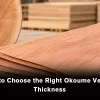


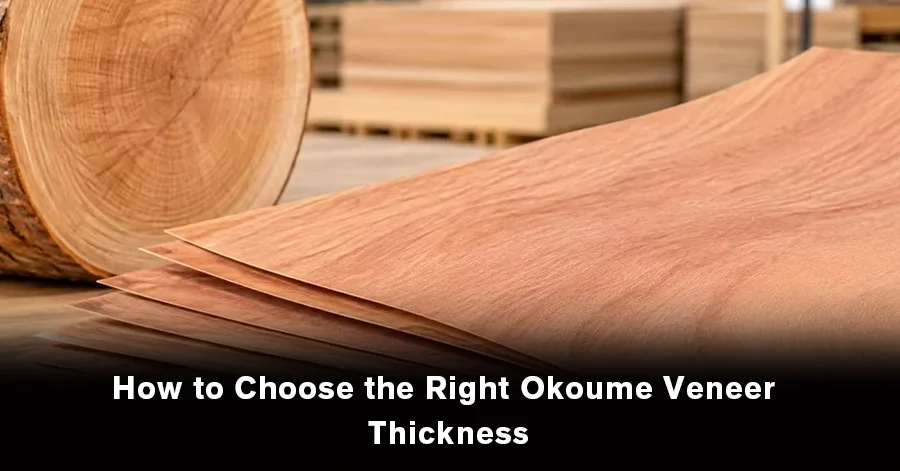
As demand for natural wood grain and high-quality finishes continues to grow in the global furniture market, Okoume veneer has become a popular choice for furniture manufacturers. However, not all Okoume furniture is made from solid Okoume wood. Many manufacturers apply Okoume veneer to plywood, MDF, and other core materials to achieve the look of natural wood at a more affordable cost.
Veneer thickness plays an important role in the final result. It affects surface quality, sanding performance, machining, and overall material costs. Choosing the right thickness helps manufacturers achieve a better finish while keeping production costs under control.
In this guide, we’ll look at how to choose the right Okoume veneer thickness for different furniture applications. We’ll also cover the key factors to consider before placing an order.
What Is the Standard Okoume Veneer Thickness?
Okoume veneer typically ranges from 0.1 mm to 1.5 mm in thickness. However, the actual thickness varies depending on the application and budget. For example, some furniture manufacturers use standard veneer around 0.2 mm thick, while those looking for a richer, more natural wood finish may choose 0.3 mm or thicker.
The exact thickness depends on the manufacturer, cutting method, and customer requirements.
| Okoume Veneer Thickness | Common Application |
|---|---|
| 0.2 mm | Low-cost plywood, hidden surfaces, and overlay panels |
| 0.3 mm | General plywood production and furniture panels |
| 0.4 mm | Furniture surfaces requiring better sanding allowance |
| 0.5 mm | Cabinet panels, decorative boards, and higher-quality plywood |
| 0.6 mm | Panels requiring additional surface thickness |
| 0.8–1.5 mm | Special furniture, joinery, and thicker veneer applications |
These thicknesses are typical commercial options rather than a fixed industry standard. Always confirm the available thickness, tolerance, and intended use with your veneer supplier.
How Does Okoume Veneer Thickness Affect Appearance and Workability?
Okoume veneer thickness affects both the final appearance of furniture and how easily manufacturers can maintain or refinish the surface over time.
- Thin veneer (around 0.3 mm): It costs less and provides the natural wood grain look many furniture makers want. However, it offers limited protection against damage. Deep dents or scratches can be difficult to repair, and manufacturers may need to replace the veneer.
- Thick veneer (0.5 mm or more): It gives furniture a more solid wood-like appearance, with deeper and more natural-looking grain. It also allows more room for sanding and refinishing. If scratches appear over time, users can sand the surface, restore its finish, or even apply a new color. This makes thick veneer a more durable option and can extend the service life of furniture.
How to Choose Okoume Veneer Thickness for Different Applications
Choosing the right Okoume veneer thickness depends on the core material, the desired surface finish, and any further processing. Different thicknesses work better for different furniture and panel applications.
Common Okoume veneer thicknesses include 0.2 mm, 0.3 mm, 0.4 mm, 0.5 mm, and 0.6 mm.
| Veneer Thickness | Typical Applications | Key Features |
|---|---|---|
| 0.2–0.3 mm | Standard plywood, drawer panels, decorative panels | Cost-effective and suitable for general veneering |
| 0.4–0.5 mm | Furniture, cabinets, door panels, interior panels | Better surface quality with some room for sanding |
| 0.6 mm and above | Premium furniture, decorative panels, specialty panels | Thicker surface layer with more room for further processing |
1. Plywood Manufacturing
Plywood manufacturers commonly use Okoume veneer between 0.3 mm and 0.5 mm thick. A 0.3 mm veneer works well for standard commercial plywood and helps keep production costs down. For panels that need a better surface finish or further sanding, 0.4–0.5 mm veneer is a better option.
2. Furniture and Cabinet Manufacturing
Furniture and cabinet makers need to consider wood grain, surface smoothness, and finishing requirements. Okoume veneer between 0.3 mm and 0.5 mm is a common choice for these applications.
Veneer in 0.4 mm or 0.5 mm thickness provides more material for sanding. It works well for furniture panels that require a smoother, higher-quality finish.
3. Doors and Interior Decorative Panels
For interior doors, door panels, and wall panels, manufacturers can choose Okoume veneer between 0.3 mm and 0.6 mm, depending on the core material and finishing process.
A 0.3 mm veneer is usually enough for basic decorative applications. If the surface needs extra sanding or special finishing, a thicker veneer may be more suitable.
4. Marine Plywood Manufacturing
Okoume veneer is also used in marine plywood production because of its lightweight properties and attractive grain. Depending on the panel structure and surface requirements, manufacturers may consider 0.4–0.6 mm veneer for the face layer.
However, veneer thickness alone does not determine marine plywood performance. Core quality, bonding strength, moisture resistance, and compliance with relevant production standards also play important roles.
Buying Tip: Don’t focus on thickness alone when sourcing Okoume veneer. Check the veneer grade, moisture content, grain consistency, and surface defects as well. The right specification should match your production process and the quality requirements of the finished product.
Common Mistakes When Choosing Okoume Veneer Thickness
Choosing Okoume veneer involves more than checking the stated thickness. You also need to consider sanding loss, substrate construction, and the requirements of the final product. Here are five common mistakes to avoid when buying Okoume veneer.
1. Only Checking the Nominal Thickness
Veneer can lose some thickness during pressing, sanding, and surface finishing. If your project requires an open-pore finish or wire brushing, check how much material will remain after sanding. This helps prevent the veneer from becoming too thin.
2. Ignoring the Properties of Okoume Wood
Okoume is a relatively soft wood. It offers limited resistance to wear, dents, and surface damage. For furniture parts such as cabinet doors and tabletops, consider a thicker veneer with enough sanding allowance to handle future refinishing.
3. Accepting Thickness Claims Without Verification
Don’t rely only on a supplier’s promise that the veneer meets the stated thickness. Ask for calibrated, thickness-sanded veneer and check the actual measurements before placing an order. You should also specify the required thickness, grade, and tolerance in your purchase contract.
4. Ignoring the Substrate Material
Manufacturers can apply Okoume veneer to plywood, MDF, and particleboard. However, each substrate has different surface properties, stability, and color. These differences can affect the final appearance. Choose the veneer thickness based on the substrate and the requirements of your finished product.
5. Using Thin Veneer on Large Furniture Surfaces
Thin veneer works well for edge wrapping, curved surfaces, and decorative details. However, large flat areas such as cabinet doors and tabletops may need thicker veneer. Consider the sanding requirements and expected daily use before making your choice.
Buying Tip: When your order arrives, use a caliper to check the veneer thickness. Also inspect the surface for color variations, substrate show-through, and visible defects. Make sure your purchase contract clearly states the required thickness and acceptable tolerance.
FAQ
What is the most common Okoume veneer thickness?
For commercial plywood and furniture panels, 0.3 mm and 0.5 mm are common options. Other thicknesses, such as 0.2 mm, 0.4 mm, and 0.6 mm, are also available from some suppliers.
Is 0.3 mm Okoume veneer suitable for plywood?
Yes. A 0.3 mm Okoume veneer is commonly used for plywood faces and furniture panels. It is suitable when the surface requires light sanding and controlled finishing.
Is 0.5 mm Okoume veneer better than 0.3 mm?
Not in every situation. A 0.5 mm veneer provides more sanding allowance, while a 0.3 mm veneer helps reduce material consumption. Choose according to your product requirements.
Can Okoume veneer be customized?
Many suppliers offer customized thicknesses, sizes, and grades. Availability depends on the production equipment, raw material, and order quantity.
What is the difference between Okoume veneer and Okoume plywood?
Okoume veneer is a thin sheet of wood used as a surface layer or as part of a plywood structure. Okoume plywood is a finished panel made by bonding multiple veneer layers together.
Choose the Right Okoume Veneer for Your Production
Selecting the right Okoume veneer thickness helps you control material costs, improve surface quality, and reduce production problems.
For general plywood manufacturing, 0.3 mm veneer is a practical starting point. For furniture panels that require additional sanding or surface finishing, 0.4 mm or 0.5 mm veneer may be a better choice.
Before placing an order, confirm the thickness, grade, size, moisture content, and tolerance with your supplier.