

What Is Okoume Veneer?
Okoume veneer, scientifically named Aucoumea klaineana, is primarily sourced from Gabon and other West‑African regions.
It refers to thin‑cut natural timber processed from Okoume logs by rotary‑cutting or slicing methods. Featuring light reddish‑brown or pinkish hues, this wood boasts soft‑light texture and straight grain. It serves as a cost‑effective option for furniture face veneers.
Can Okoume Veneer Be Painted?
Yes, Okoume veneer can be painted.
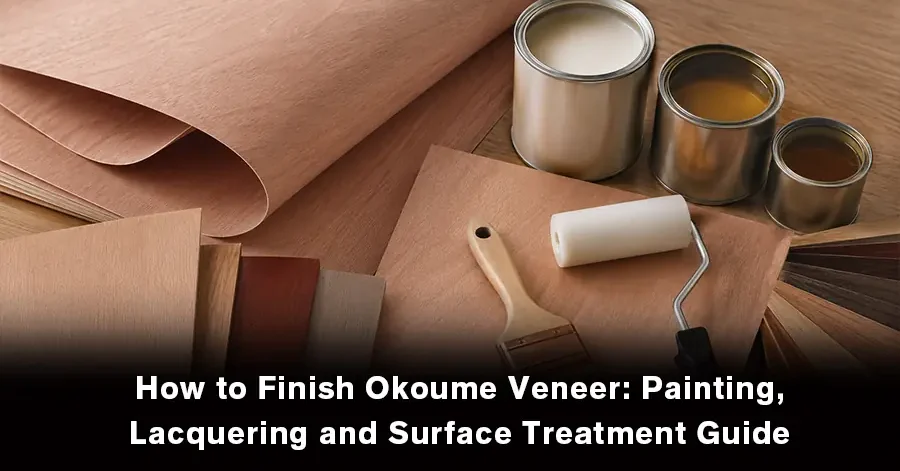
Due to its smooth surface and uniform texture, Okoume veneer provides an excellent base for painted finishes. However, because natural wood absorbs coatings differently, proper preparation is necessary to achieve an even and durable finish.
Steps for Painting Okoume Veneer
1. Clean and Prepare the Surface
Before painting, the veneer surface should be:
- Clean and dry
- Free from dust and oil
- Smooth without cracks or defects
If necessary, repair small imperfections with suitable wood filler before sanding.
2. Sand the Veneer Surface
Sanding improves paint adhesion and creates a smoother coating surface.
Recommended sanding process:
| Step | Sandpaper Grit | Purpose |
|---|---|---|
| Initial sanding | 180–220 grit | Remove surface imperfections |
| Fine sanding | 320 grit | Create a smooth finishing surface |
Always sand along the direction of the wood grain and avoid cross‑grain sanding. Sanding against the grain will leave scratch marks across the veneer surface.
Because Okoume veneer is a thin natural wood layer, avoid excessive sanding that may damage the veneer surface.
3. Apply Wood Primer
A wood primer is recommended before painting.
Benefits include:
- Reducing uneven absorption
- Improving paint adhesion
- Creating better color consistency
- Preventing surface defects
For professional furniture production, high-quality wood primers are commonly used.
4. Apply Paint Coating
Okoume veneer can be finished with different paint types:
| Paint Type | Features | Suitable Applications |
|---|---|---|
| Water-based paint | Environmentally friendly, low odor | Indoor furniture |
| Acrylic paint | Fast drying and stable | Decorative panels |
| PU paint | High durability and protection | Premium furniture |
| Alkyd paint | Good coverage | General woodworking |
For the best results, applying several thin coats is usually better than one thick coat.
Can Okoume Veneer Be Lacquered?
Yes, Okoume veneer can be lacquered, and lacquering is one of the most popular finishing methods.
Clear lacquer protects the veneer surface while allowing the natural wood grain and warm color to remain visible.
This makes lacquered Okoume veneer especially popular for:
- Luxury furniture
- Cabinet doors
- Interior decoration
- Yacht interiors
Benefits of Lacquering Okoume Veneer
Enhance Natural Wood Appearance
Transparent lacquer can highlight the fine grain and natural color of Okoume wood.
It creates a more premium appearance compared with untreated veneer.
Improve Surface Protection
A lacquer coating helps protect Okoume veneer from:
- Moisture
- Scratches
- Dust
- Stains
- UV exposure
Easier Maintenance
Lacquered surfaces are easier to clean and maintain compared with untreated natural veneer.
How to Lacquer Okoume Veneer
Step 1: Surface Sanding
Before lacquering, carefully sand the veneer surface.
Recommended:
- Initial sanding: 180–220 grit
- Final sanding: 320 grit
Remove all dust after sanding.
Step 2: Apply Wood Sealer
A sealer helps:
- Reduce uneven lacquer absorption
- Improve surface smoothness
- Create a stable coating base
This step is especially important for professional production.
Step 3: Apply Lacquer Coats
Common lacquer options include:
- PU lacquer
- Acrylic lacquer
- Nitrocellulose lacquer
- Water-based lacquer
For high-quality furniture applications, PU lacquer is often preferred because of its excellent durability.
Usually, 2–3 thin coats are recommended.
Allow enough drying time between each coat.
Step 4: Final Polishing
After the lacquer fully dries, the surface can be polished according to the desired appearance:
- Matte finish
- Semi-gloss finish
- High-gloss finish
Other Surface Treatments for Okoume Veneer
Besides painting and lacquering, Okoume veneer can also be finished using different treatment methods.
1. Oil Finish
Wood oil penetrates into the veneer and enhances its natural grain.
Advantages:
- Natural appearance
- Warm wood feeling
- Easy maintenance
Recommended for:
- Furniture
- Decorative panels
- Interior applications
2. Wax Finish
Wax creates a smooth and natural surface.
Benefits:
- Soft touch
- Natural appearance
- Easy application
However, wax provides less protection than lacquer or PU coatings.
3. Staining
Although Okoume veneer already has an attractive natural color, stains can be applied to create different appearances.
Common effects include:
- Walnut color
- Dark brown finish
- Vintage style
- Custom colors
Before mass production, testing is recommended because different veneer batches may absorb stains differently.
Okoume Veneer Finishing Methods Comparison
| Finish Method | Appearance | Protection Level | Recommended Applications |
|---|---|---|---|
| Clear lacquer | Natural wood grain | High | Furniture, yacht interiors |
| PU coating | Premium and durable | Very High | Luxury furniture |
| Paint finish | Custom colors | Medium-High | Cabinet doors, panels |
| Oil finish | Natural wood feeling | Medium | Interior decoration |
| Wax finish | Soft and natural | Low | Decorative applications |
Tips for Achieving the Best Okoume Veneer Finish
Choose High-Quality Okoume Veneer
The quality of raw veneer directly affects the final finishing result.
Premium Okoume veneer should have:
- Uniform thickness
- Smooth surface
- Clear grain
- Low defect rate
Control Moisture Content
Before finishing, the veneer should have stable moisture content.
Excess moisture may cause:
- Coating failure
- Cracking
- Peeling
- Surface deformation
Test Finishing Materials Before Production
Different coatings may produce different colors and surface effects.
For furniture manufacturers and industrial users, always test finishing materials on samples before large-scale production.
Conclusion
Okoume veneer is an excellent material for projects requiring a beautiful wood appearance and high-quality finishing results.
With proper surface preparation, sanding, and coating selection, Okoume veneer can be painted, lacquered, stained, or treated with various finishing methods.
The right finishing process not only improves the appearance of Okoume veneer but also enhances durability and extends its service life.
For premium Okoume veneer solutions, contact AEW Wood for professional support and customized options.