When choosing the right wood for construction, furniture, or marine applications, the type of timber you select can make or break the project. Many professionals today are turning toward okoume timber as a reliable alternative to traditional tropical hardwoods. Known for its lightweight nature, smooth grain, and excellent workability, okoume wood has become increasingly popular across industries ranging from boat building to interior design.
But how does it actually compare to other tropical hardwoods like teak, mahogany, and meranti?
In this practical comparison, we’ll explore the key differences between okoume timber and other tropical hardwoods, helping you understand when and why okoume might be the best choice for your next project. Whether you’re a builder, carpenter, designer, or sourcing materials from a woodworking supplies store in Gabon, this guide will help you make an informed decision.
What is Okoume Timber?
Okoume timber comes from the Aucoumea klaineana tree, which grows primarily in Central Africa, especially in Gabon. Because of its light weight, fine grain, and smooth surface, it is widely used for plywood production, veneers, and lightweight construction materials.
One of the most well-known products made from okoume is okoume marine plywood, which is specifically engineered for environments where moisture resistance and durability are essential.
Key Characteristics of Okoume Wood
- Lightweight compared to most tropical hardwoods
- Straight and uniform grain pattern
- Smooth surface ideal for veneers
- Excellent workability for carpentry and manufacturing
- Good strength-to-weight ratio
These features make okoume wood a preferred material in applications where weight reduction and aesthetic quality are important.
Popular Tropical Hardwoods Used for Comparison
Before we compare performance, it’s helpful to look at some of the common tropical hardwoods used in woodworking and construction.
Teak
Teak is widely known for its durability, water resistance, and natural oils. It’s commonly used for boat decks, outdoor furniture, and high-end interior work.
Mahogany
Mahogany is valued for its rich color, stability, and premium appearance. It is often used in luxury furniture, cabinetry, and musical instruments.
Meranti
Meranti is a versatile hardwood used for construction, plywood manufacturing, and interior finishing.
Each of these woods has unique properties, but when compared with okoume timber, the differences become clear in terms of weight, cost, workability, and usage.
Okoume Timber vs Other Tropical Hardwoods
1. Weight and Workability
One of the biggest advantages of okoume timber is its lightweight nature.
Compared to hardwoods like teak or mahogany, okoume wood is significantly lighter, making it easier to handle during construction and manufacturing.
Why this matters:
- Easier transportation and installation
- Reduced structural load in projects
- Faster machining and cutting
This is one of the reasons why okoume marine plywood is widely used in boat building and marine construction.
2. Appearance and Finish
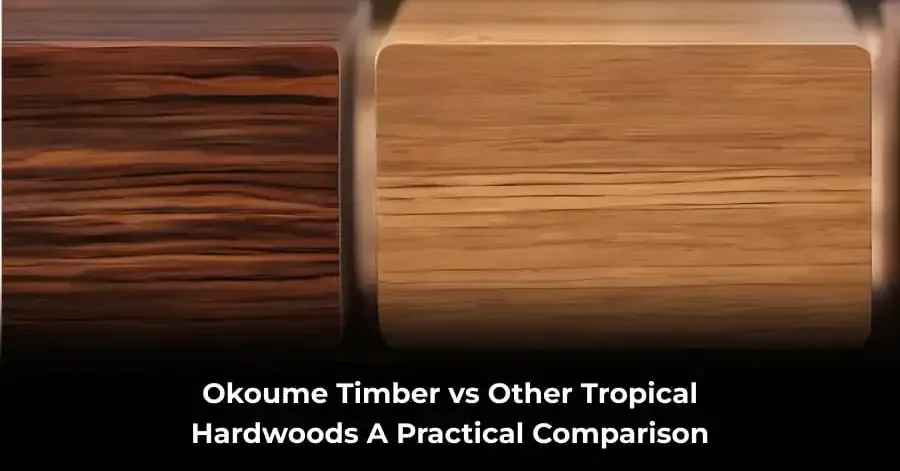
When it comes to visual appeal, okoume veneer is highly valued for its smooth, even grain pattern and attractive light pink to reddish color.
Compared to other tropical hardwoods:
| Wood Type | Grain Pattern | Appearance |
| Okoume Wood | Fine and uniform | Light pink to reddish |
| Mahogany | Rich and straight | Deep reddish brown |
| Teak | Oily and coarse | Golden brown |
| Meranti | Variable | Light to dark red |
Because of its consistent texture, okoume veneer is often used in decorative panels, luxury interiors, and architectural design projects.
3. Marine Performance
In marine environments, durability and moisture resistance are crucial.
Okoume marine plywood is specifically manufactured for these conditions. When properly treated and sealed, it provides excellent strength while remaining lightweight.
Compared to other woods:
- Teak is naturally water-resistant but very expensive
- Mahogany is strong but heavier
- Meranti is durable but less lightweight
For boat builders and marine engineers sourcing materials from a woodworking supplies store in Gabon, okoume marine plywood offers an ideal balance between weight, strength, and affordability.
4. Cost and Availability
Another practical factor when comparing timber types is cost.
High-end tropical hardwoods like teak and mahogany can be significantly more expensive due to limited availability and high demand.
In contrast, okoume timber is more affordable while still providing excellent performance for many applications.
Because Gabon is one of the primary sources of okoume, buyers working with a woodworking supplies store in Gabon often find reliable supply chains and competitive pricing.
This makes okoume wood an attractive option for large-scale construction projects, furniture manufacturing, and marine applications.
5. Sustainability and Responsible Sourcing
Sustainability has become a key consideration in modern woodworking and construction industries.
Okoume forests in Gabon are increasingly managed through responsible forestry practices and regulated harvesting.
Many manufacturers sourcing from a woodworking supplies store in Gabon prioritize certified timber to ensure sustainable production.
When responsibly harvested, okoume timber offers a more environmentally conscious option compared to some overexploited tropical hardwood species.
Common Applications of Okoume Wood
Because of its versatile properties, okoume wood is used in many industries.
Marine and Boat Building
Okoume marine plywood is widely used for:
- Boat hulls
- Deck structures
- Interior boat panels
Its lightweight structure improves boat performance and fuel efficiency.
Furniture and Interior Design
Designers frequently use okoume veneer for:
- Decorative wall panels
- Cabinets and furniture
- Architectural interior finishes
Its smooth texture and consistent grain make it ideal for premium surfaces.
Construction and Woodworking
Builders sourcing materials from a woodworking supplies store in Gabon often choose okoume timber for:
- Lightweight construction components
- Doors and paneling
- Custom carpentry projects
Why Professionals Choose Okoume Timber
Many builders and manufacturers prefer okoume timber because it offers a balance of performance, aesthetics, and affordability.
Key reasons professionals choose it include:
- Lightweight structure for easy handling
- Smooth finish for veneers and interiors
- Cost-effective compared to premium hardwoods
- Ideal material for okoume marine plywood
- Reliable supply from a woodworking supplies store in Gabon
These advantages make okoume wood a practical choice for both commercial and residential projects.
AEW Woods – A Trusted Source for Okoume Timber
If you are looking for premium-quality okoume timber, okoume veneer, or okoume marine plywood, AEW Woods is a trusted supplier known for delivering high-grade timber products.
With a strong sourcing network connected to leading woodworking supplies stores in Gabon, AEW Woods ensures that customers receive sustainably sourced and carefully processed wood materials suitable for marine, furniture, and construction applications.
Their commitment to quality, sustainability, and reliable supply makes AEW Woods a preferred partner for businesses and craftsmen working with okoume wood worldwide.
Conclusion
Choosing the right timber depends on the specific requirements of your project. While traditional tropical hardwoods like teak, mahogany, and meranti have long been popular, okoume timber offers a modern alternative that combines lightweight performance, smooth grain, and cost efficiency.
From marine construction to interior design, okoume wood continues to gain popularity because of its versatility and workability. Products like okoume marine plywood and okoume veneer make it possible to achieve both structural reliability and visual elegance.
For professionals sourcing materials from a woodworking supplies store in Gabon, okoume remains one of the most practical and widely used tropical hardwood options available today.
Frequently Asked Questions:
- What makes okoume timber different from other tropical hardwoods?
Okoume timber is lighter and easier to work with compared to hardwoods like teak and mahogany. It also provides a smooth grain, making it ideal for veneers and plywood applications.
- Is okoume marine plywood good for boat building?
Yes, okoume marine plywood is widely used in boat construction because it offers a strong strength-to-weight ratio and performs well in moisture-prone environments when properly sealed.
- Where does okoume wood come from?
Okoume wood mainly comes from Central Africa, particularly Gabon, where it is harvested and processed through certified forestry operations and distributed through a woodworking supplies store in Gabon.
- What is okoume veneer used for?
Okoume veneer is commonly used in furniture manufacturing, interior wall panels, cabinetry, and decorative architectural elements due to its smooth and attractive grain.
- Is okoume timber sustainable?
When sourced responsibly from regulated forests, okoume timber can be a sustainable choice. Many suppliers and woodworking supplies stores in Gabon follow certified forestry practices to ensure responsible harvesting.